LOCAL HISTORY
The History of Moustique
The official version is shorter.
Nobody agrees exactly when Moustique became a town. People lived along the water long before anybody bothered naming the place, and families here still measure history less by dates than by storms, fires, floods, marriages, disappearances, and which buildings managed to survive all of them.
The records tell one story. The town tells another. Usually after dark.
BEFORE THE TOWN
Water came first.
Before roads reached Moustique, the wetlands determined almost everything.
Fishing camps followed higher ground. Houses were raised where they could be. Boats carried people, mail, supplies, livestock, and gossip between places that were easier to reach by water than land.
The marsh provided food, work, shelter, and trouble.
It still does.
A WORKING TOWN
Built around whatever the swamp would allow.
Moustique never had much industry in the traditional sense.
People fished. They trapped. They repaired boats. They hauled timber, fuel, bait, ice, feed, and whatever else somebody needed badly enough to pay for.
Small stores became landmarks. Docks became meeting places. Family names became directions.
You did not tell someone where a road ended. You told them whose place was at the end of it.
Some of those names remain.
Bessette. Broussard. Boudreaux. Baptiste.
People here remember names longer than buildings.
HISTORIC TIMELINE OF MOUSTIQUE
From stilt homes to a town with rules.
A chronological look at how a handful of homes in the Broussard Wetlands became the quiet, folklore-rich town known today as Moustique.
1894
Settlement Begins
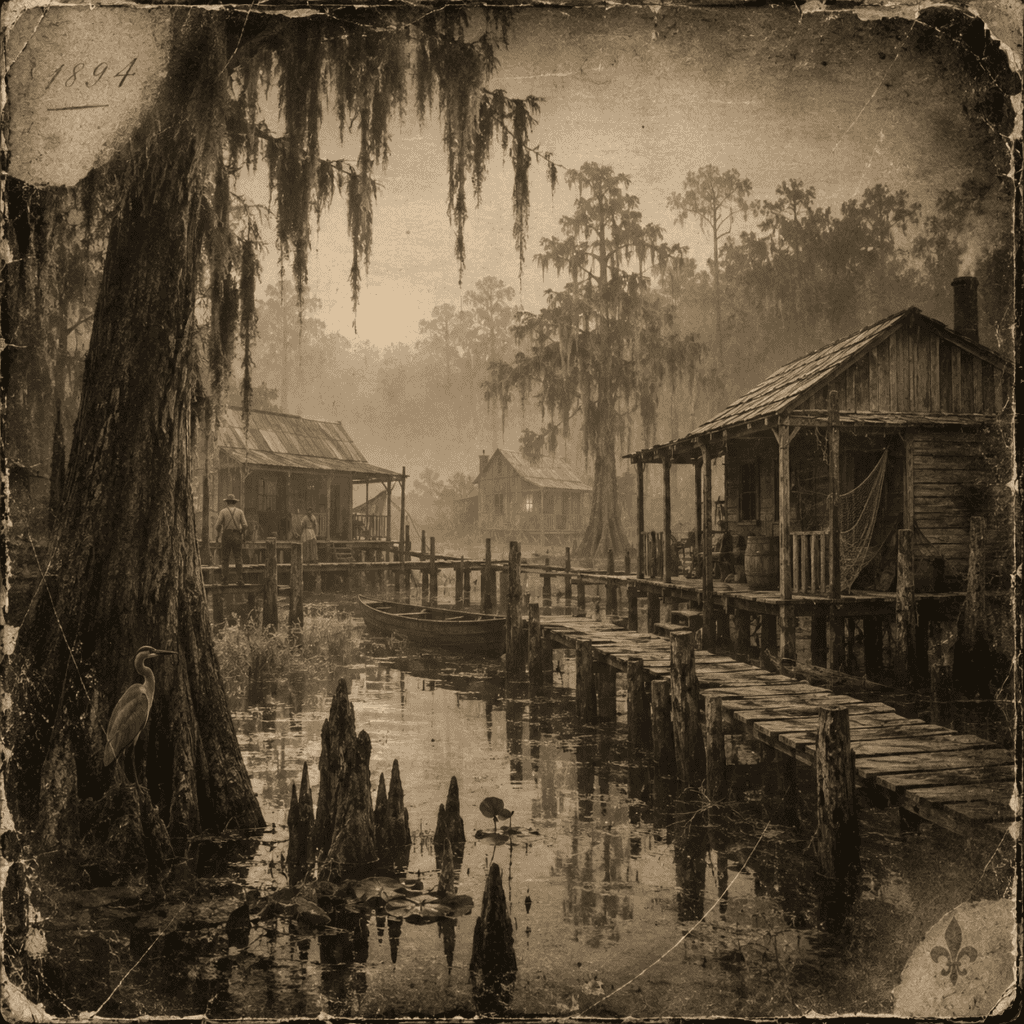
Three fishing families establish some of the first permanent raised homes along the higher edges of the marsh.
- Broussard, Thibodeaux, and Bessette appear among the earliest family names.
- Rough cypress walkways connect homes, docks, and higher ground.
- Residents begin referring to shimmering insect rings above still water as mosquito halos.
1897
The Naming of Moustique
The settlement begins appearing in local records as Moustique, a name associated with insects gathering over the water at dusk.
Local accounts tell it differently.
1903
The First Community Dock
A shared dock becomes the center of fishing, deliveries, trade, and most information worth knowing.
Archive note: Initials and family names carved into old timbers are still visible today.
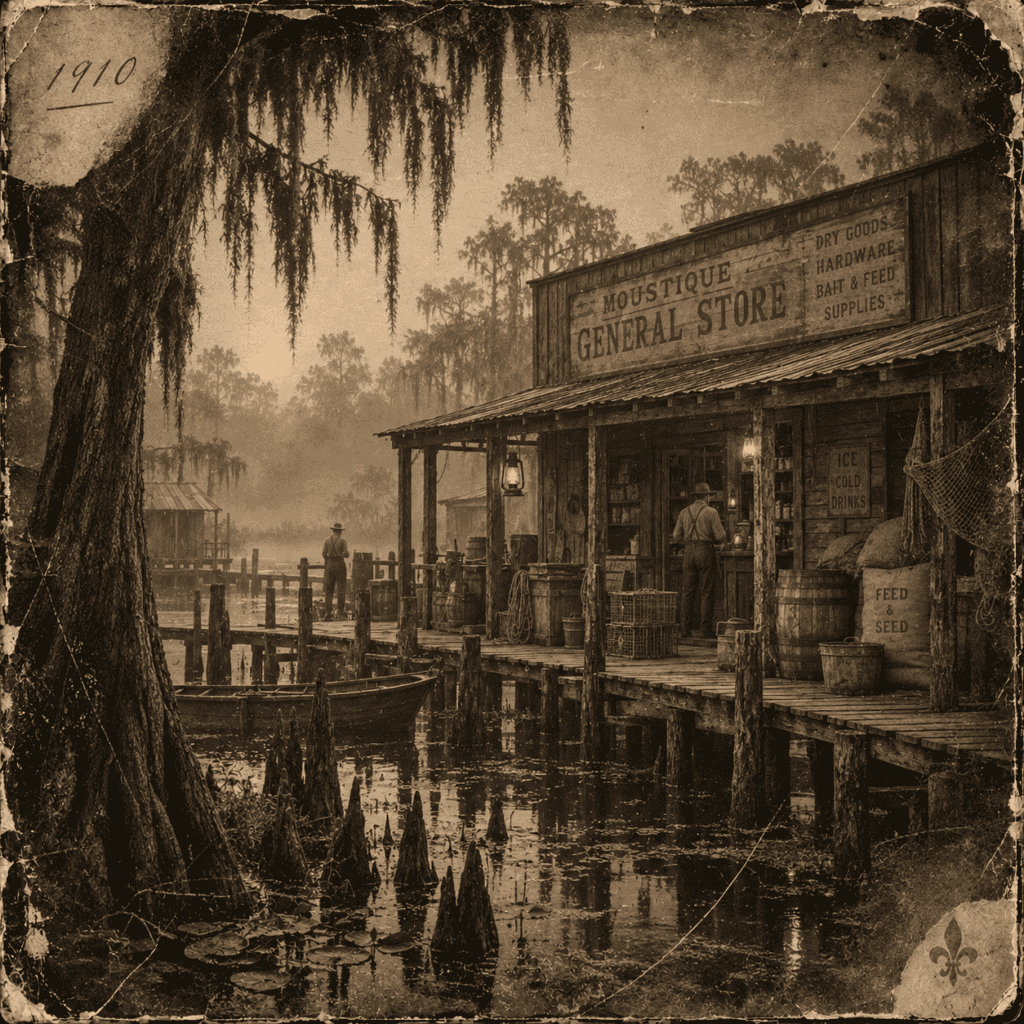
1910
The General Store Opens
A small bait, provisions, and supply counter opens near the main boardwalk. The building changes hands many times. Today, most people simply call it Celeste’s.
1921
The Lantern Walk Begins
Residents traveling after dark begin moving together with lanterns rather than alone. Over time, practicality becomes tradition.
Some traditions begin because something happened.
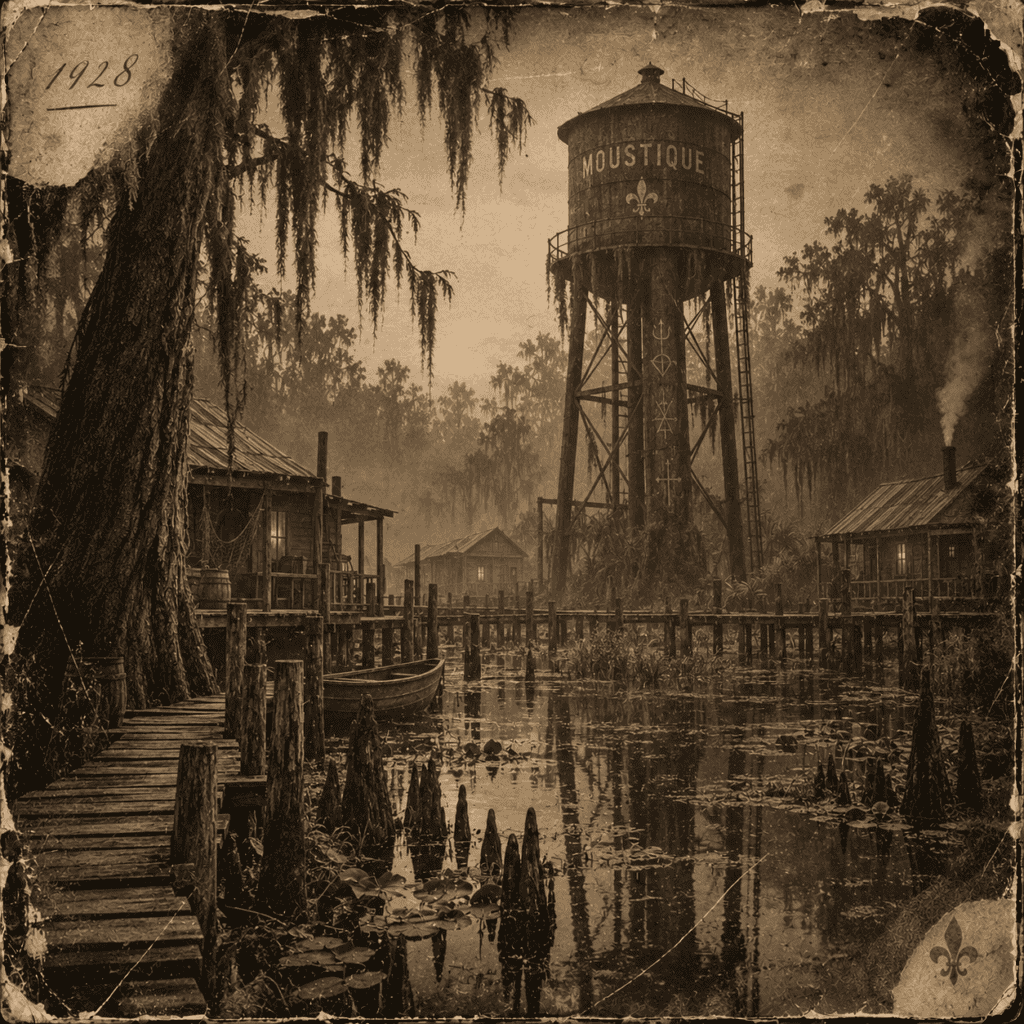
1928
The Water Tower
Moustique’s rust-red water tower rises above the wetlands. Workers leave initials, dates, and several unusual carved markings in the structure. Nobody seems entirely sure who made the latter.
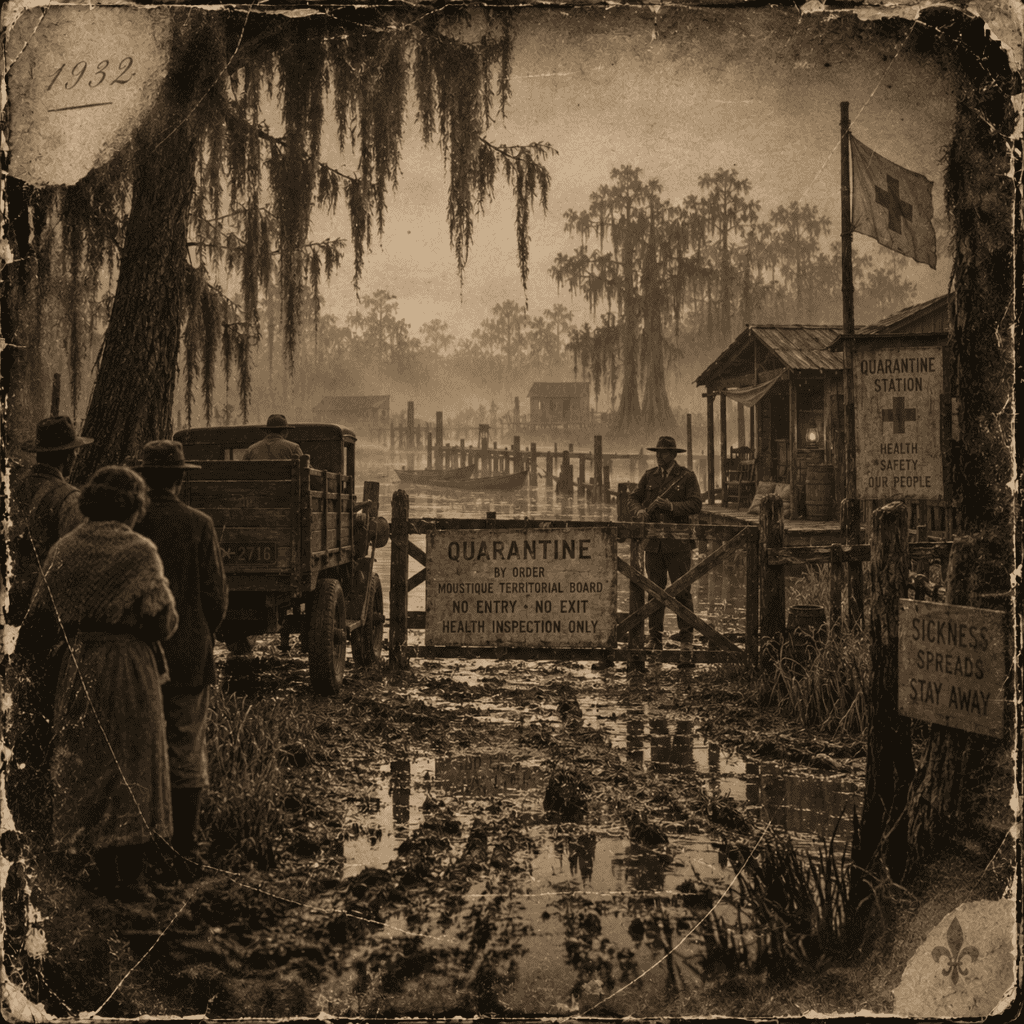
1932
THE QUARANTINE
The records become thin.
For several months in 1932, roads into the wetlands are restricted and travel through Moustique sharply declines.
- illness
- livestock deaths
- contaminated water concerns
- road closures
- a parish quarantine order whose documentation is incomplete
Several families leave. Others remain. Official records eventually describe the matter as resolved.
Local accounts are less specific. And considerably less reassuring.
Records resume in November.
1936
The Rules Become Tradition
In the years following the quarantine, several warnings appear repeatedly in family notebooks, fishing logs, and oral histories.
- Don’t whistle after dark.
- Don’t follow lights over the water.
- Don’t answer a voice unless you know where it is coming from.
Nobody knows exactly when the warnings became rules. By 1936, apparently everybody knew them.
1952
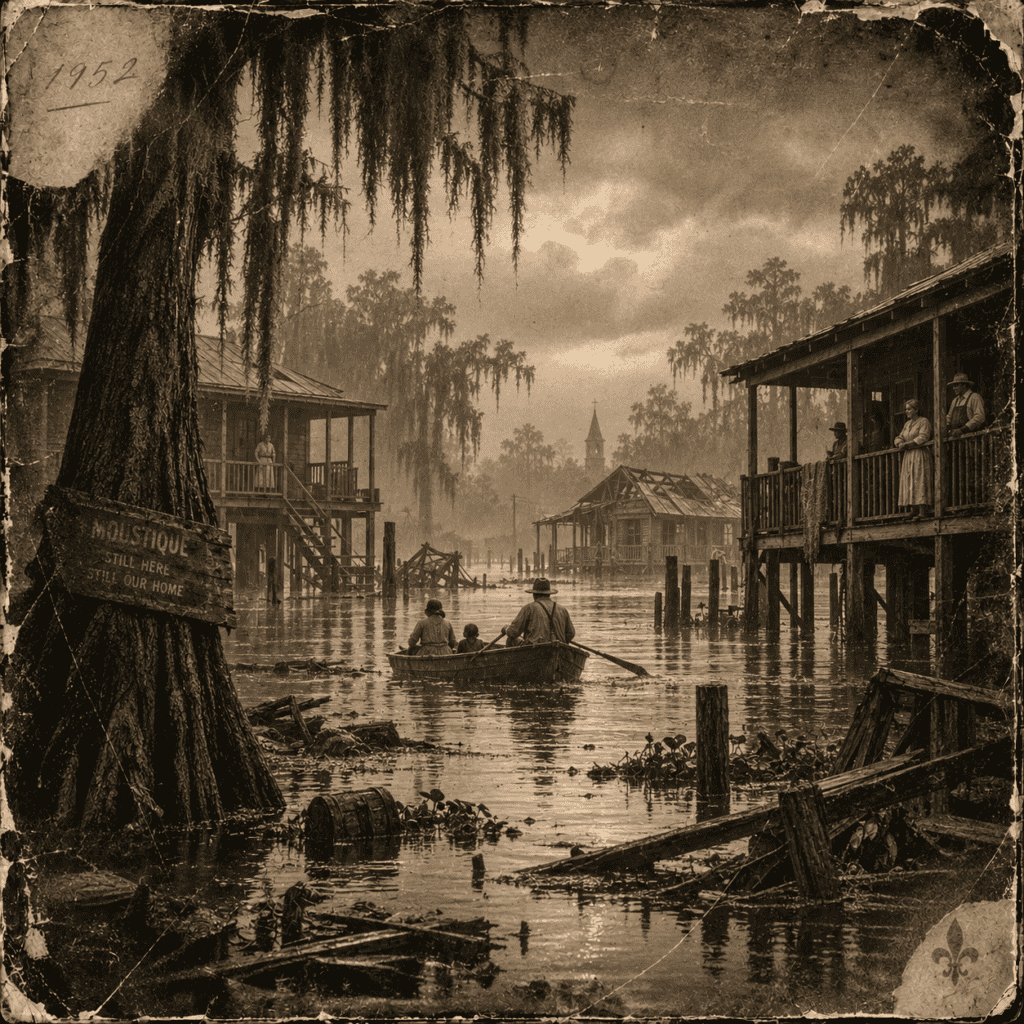
The Great Flood
A major storm floods much of Moustique for nearly three days. Homes are rebuilt higher and walkways reinforced. Several older sections of boardwalk reportedly survive with surprisingly little damage.
Locals call that luck. Mostly.
1964
Parish Lodge Conversion
An unused parish building becomes temporary lodging for fishermen, seasonal workers, stranded travelers, and visitors who discover the road home is less dependable after heavy rain.
1979
Airboat Routes Established
Local operators begin mapping dependable corridors through the open marsh. Visitors follow soon after, marking the beginning of organized swamp touring around Moustique.
1998
The Night Market Returns
An older tradition of evening trading and community gatherings is revived as the Moustique Night Market. Lanterns, food stalls, music, and visiting vendors bring the waterfront back to life.
2011
Bessette Memorial Boardwalk Opens
A restored stretch of historic boardwalk is dedicated to generations of Bessette fishermen, boatmen, and residents who worked the surrounding wetlands. Several older planks and carvings are preserved during construction.
Some predate the boardwalk. Nobody has offered a convincing explanation for that.
PRESENT DAY
A Town That Listens
Moustique remains intentionally small, intentionally quiet, and closely tied to the wetlands that shaped it.
Fishing boats still leave before sunrise. Lanterns still appear along the boardwalk after dark. Storms still decide whether the road stays open.
“It’s peaceful. But it feels like the swamp is paying attention.”
WHAT THE RECORDS SAY
Paper keeps facts.
County documents, handwritten ledgers, newspaper fragments, church records, property transfers, and family Bibles provide pieces of Moustique’s history.
Dates. Names. Deaths. Storm damage. Land sales. Missing pages.
Most of it is ordinary.
That may be why the unusual parts stand out.
WHAT THE TOWN REMEMBERS
The town keeps everything else.
Moustique also has another archive.
Stories repeated at counters. Warnings passed from grandparents to children. Rules nobody remembers learning. Places everybody knows and nobody recommends after dark.
Official records explain what happened.
Local memory is more interested in what happened next.
LANDMARKS
Places that outlived their explanations.
The Moustique water tower can still be seen above the tree line.
Bessette’s Station has served generations of people who waited too long to buy fuel somewhere else.
The General Store has changed owners, shelves, and suppliers without changing much else.
Fishing camps have disappeared and been rebuilt. Boardwalks have shifted. Roads have moved.
The swamp has taken some things.
The town has put some of them back.
LOCAL CUSTOM
Some history is remembered as instruction.
Not every tradition in Moustique comes with a story.
- Do not whistle after dark.
- Do not follow lights into the wetlands.
- If somebody calls your name from the water, make sure you know who it is before answering.
You can call those superstitions.
Most people here would not argue.
They would just wonder why you felt the need to test them.
THE PROBLEM WITH HISTORY
Everybody wants the first version.
Who founded the town? What happened in 1932? When did the rules start? Why do some families refuse to talk about certain parts of the wetlands?
Moustique is not very good at first versions.
It has revisions. Contradictions. Stories that improve with age. Records that stop just before they become useful.
And people who will tell you exactly what happened right up until the moment you ask how they know.
VISITOR NOTE
You do not have to believe any of it.
That is one of the nice things about history. You can read the plaque. Check the dates. Look at the photographs. Decide what probably happened.
People in Moustique have been doing that for generations.
Just do it before dark.